“Raise Funds” in Southeast Asia can feel like speed‑dating while taking a pop quiz: you need chemistry, sharp answers, and decent unit economics. The good news? Plenty of capital is available for founders who are prepared.
Here’s a practical guide to what funding sources exist, how the process works, why startups get a “yes” (or “not yet”), and what to do to increase your odds—plus two fresh case studies from the region.
Most Common Sources For Startups To Raise Funds
Angel Investors
What they are: High‑net‑worth individuals (often ex-founders or operators) who invest personal capital at pre‑seed/seed, typically with fast decisions and light diligence.
Ideal for: Very early teams validating problem–solution fit, pre‑revenue or early revenue; capital‑efficient B2B SaaS, consumer apps with strong early engagement, fintech/marketplaces in pilot; founders who value hands‑on operator advice and intros while they raise funds for early momentum.
Typical check sizes (SEA): Individual angels: US$10k–US$100k; angel syndicates: US$100k–US$500k; occasional US$500k+ via strong syndicates.
Examples and platforms:
- AngelList – Discovery and syndicates
- BANSEA – Business Angel Network of Southeast Asia (Singapore)
- AngelCentral – Curated angels and education (Singapore)
- XA Network – Senior tech leaders investing in SEA

Venture Capital Funds
What they are: Institutional funds investing for outsized returns. Expect larger checks, board governance, and structured processes.
Ideal for: Seed to Series A companies with clear traction signals—paying customers, strong retention/cohorts, credible unit economics, or a path to it. Capital‑intensive plays (fintech, logistics, deep tech) or fast‑scalers needing GTM and hiring firepower, especially when preparing to raise funds for aggressive growth
Typical check sizes (SEA):
- Pre‑seed: US$100k–US$500k; Seed: US$500k–US$2.5M
- Series A: US$3M–US$10M+. Partnered rounds and multi‑stage funds can exceed these.
SEA-focused examples:
- Peak XV Partners – early to growth across India/SEA.
- East Ventures – Indonesia-first, multi-stage.
- Golden Gate Ventures – early-stage across SEA.
- Monk’s Hill Ventures – early-stage SEA.
- 500 Global – pre-seed/seed and programs in SEA.

Grants
What they are: Non-dilutive capital from governments, foundations, or corporates to support innovation, R&D, and commercialization.
Ideal for: Founders looking to raise funds without giving up equity—particularly those in R&D-heavy or public-good-aligned sectors such as deep tech, AI/robotics, healthtech, climate/cleantech, agri/food tech, or productivity tech serving SMEs. Also suitable for early commercialization and pilot deployments.
Typical grant ranges (SEA): US$25k–US$100k for ideation/POC; US$100k–US$500k for development/commercialization; select programs can exceed US$1M for consortia or deep‑tech milestones. Often, milestone‑based and co‑funding are required.
SEA examples:
- Singapore: EnterpriseSG grants (e.g., Startup SG Tech), NRF programs
- Malaysia: Cradle Fund (e.g., CIP SPARK, CIP SPRINT)
- Indonesia: BRIN research/innovation support
- Thailand: NIA (National Innovation Agency) grants and incubation
- Vietnam: Local city funds vary

Accelerators
What they are: Time‑boxed programs (8–16 weeks) that provide capital, mentorship, and customer access in exchange for equity; often culminating in a Demo Day designed to help founders raise funds efficiently.
Ideal for: Founders seeking structured company‑building, rapid iteration, and fundraising momentum; pre‑seed to early seed teams aiming to raise funds with a demo/MVP; first‑time founders benefitting from brand signal and investor access.
Typical investment (SEA/global with SEA presence): US$100k–US$500k for ~5%–10% equity, depending on program; some offer follow‑on checks up to US$250k–US$1M.
Options with SEA footprint:
- Y Combinator – many SEA alumni; strong fundraising signal.
- Antler – company‑building from day zero, active in SEA.
- Iterative – SEA-focused accelerator modeled on YC.
- Accelerating Asia – regional accelerator and VC.
- Techstars – thematic programs; some based in or scout in SEA.
- Plug and Play APAC – corporate pilots and investments.
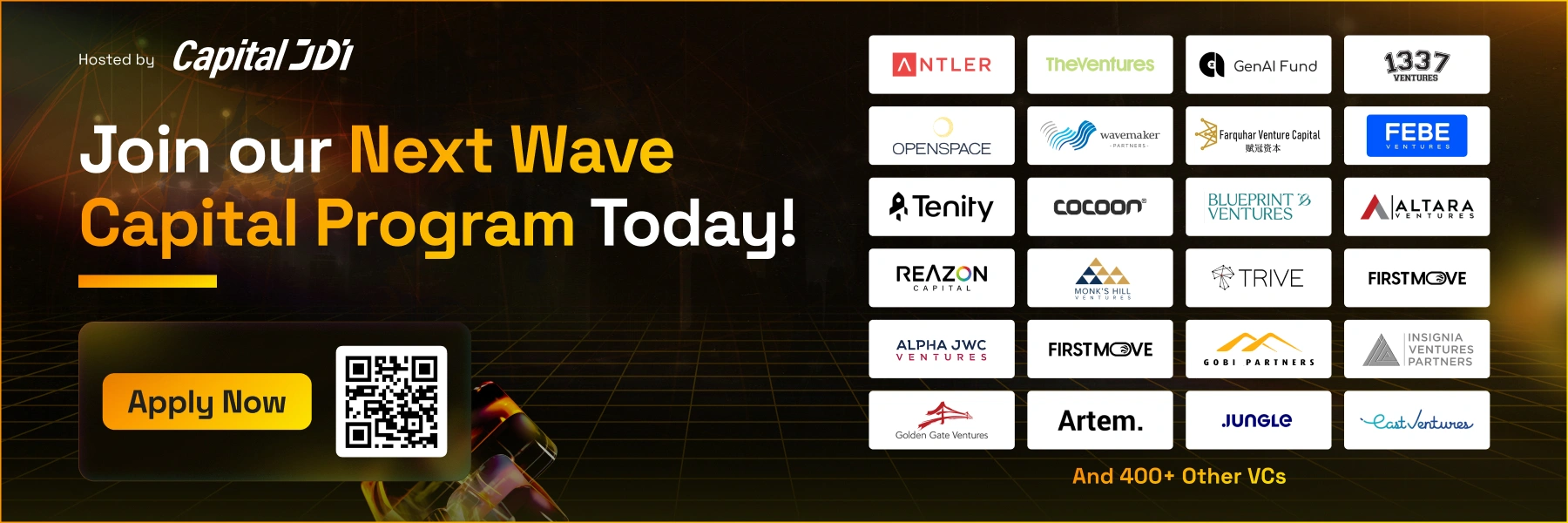
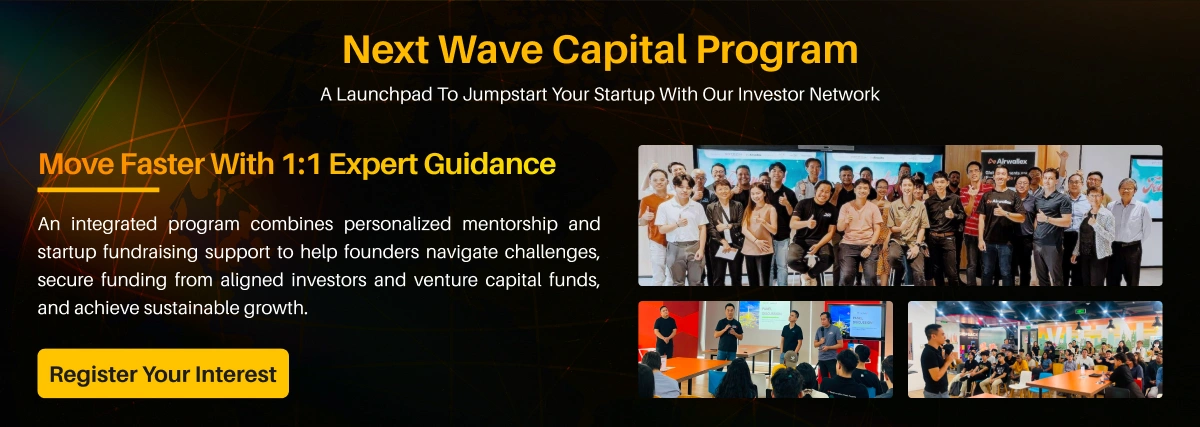
- Next Wave Capital Program – 2-month initiative featuring SEA’s most active funds for 1:1 mentorship
The Process Of Getting Funded (and a Realistic Timeline)
Think of this as a pipeline with clear owner tasks, artifacts, and milestones. Typical seed timeline: 8–16 weeks end‑to‑end if prepared; 3–6 months if starting from scratch or targeting institutional VCs looking to raise funds at scale.
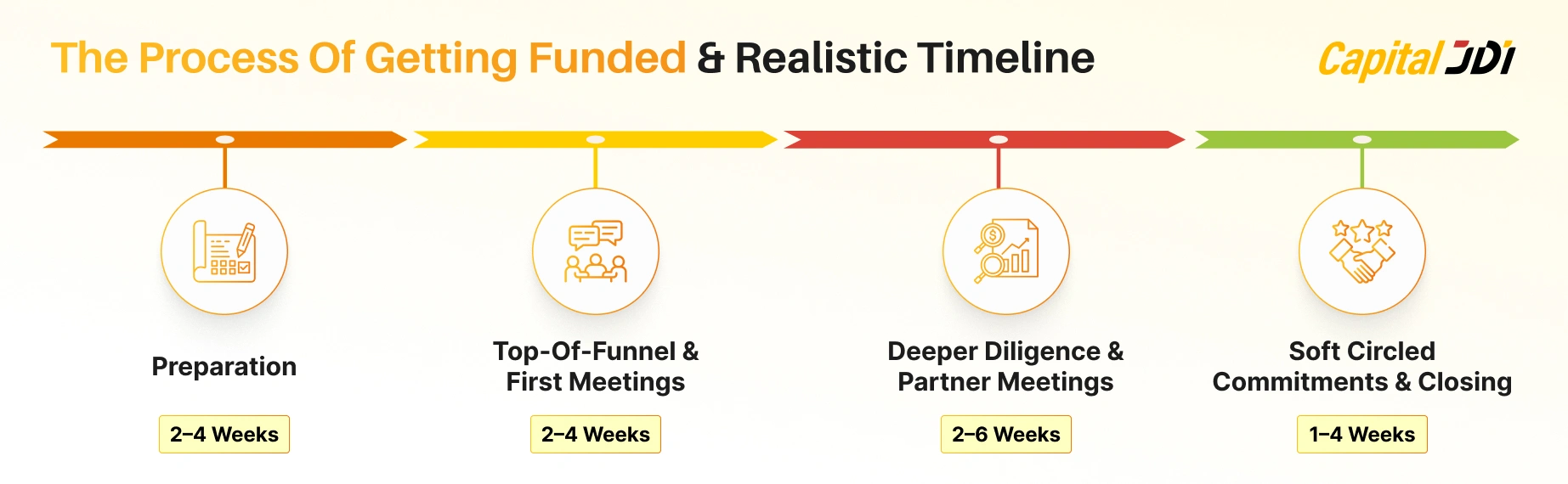
Preparation (2–4 weeks)
- Craft a crisp narrative: problem, solution, why now, team edge, traction, business model, market sizing, which are the foundation to raise funds.
- Data room V0: pitch deck (10–15 slides), KPI dashboard, product demo, traction metrics, cohort and retention (if applicable), GTM, financial model (12–24 months), cap table, key customer references/LOIs, legal docs.
- Target list: 30–80 angels/VCs mapped by stage, sector, geography, check size; prioritize warm intros.
Top-of-funnel and first meetings (2–4 weeks)
- Outreach: 10–20 intros per week; track in a CRM.
- First calls: 30–45 minutes; goal is to get to partner/second meeting, not to “close.”
- Red flags to preempt: unclear ICP, fluffy TAM, hand‑wavy unit economics, weak founder‑market fit.
Deeper diligence and partner meetings (2–6 weeks)
- Product/tech deep dive, data pulls (e.g., revenue by cohort, funnel conversion, burn runway).
- Customer or pilot references; security/compliance overview if relevant.
- Negotiation on round size, instrument (SAFE/notes vs equity), valuation cap/terms — critical as you prepare to raise funds under the right structure.
Soft circled commitments and closing (1–4 weeks)
- Identify a lead (or anchor angel/syndicate), then leverage momentum to fill the round.
- Legal docs: SAFE or SPA/SSA; confirm ESOP pool, pro‑rata, information rights.
- Funds flow after signatures and conditions precedent are satisfied.
* Handy pacing heuristic:
- If you’re not getting second meetings after 10–15 first calls: messaging or readiness issue.
- If you’re getting second meetings but no term sheets after 4–6 weeks: proof points or deal structure issue.
- If you have a term sheet: compress closing to ≤3 weeks to preserve momentum and effectively raise funds without losing interest.
How Some Startups Raise Funds Successfully—and Why Others Can’t
VCs aren’t fortune tellers—they’re pattern matchers with spreadsheets. If your story is crisp, the data is honest, and the plan is grounded, you’ll feel the wind at your back when you raise funds. If not, even a hot market can feel chilly. Here are the top reasons deals stall in SEA:
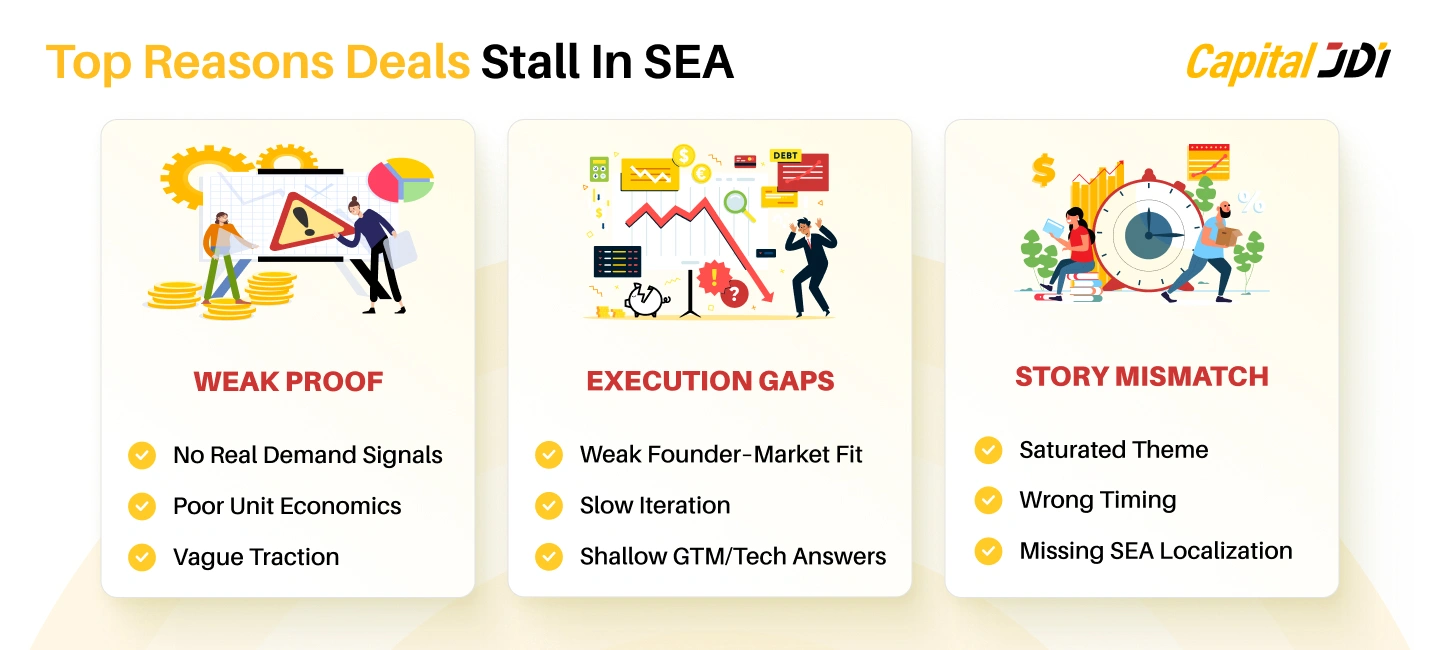
Insufficient proof of demand and shaky unit economics
- Vague traction (“lots of interest”) without paid pilots, retention, or revenue quality.
- CAC math that excludes sales compensation or underestimates payback.
Weak founder‑market fit and execution signals
- Team lacks domain edge or prior evidence of shipping.
- Slow iteration cadence; inability to answer technical or GTM depth questions.
Story‑market mismatch or timing risk
- Chasing a saturated theme without a wedge, or too early for local regulatory or infra realities.
- SEA‑specific nuance missing (localization, partnerships, compliance, payments/logistics).
* Honorable mentions: messy cap tables, over‑optimistic valuations, unclear use of funds, and governance concerns — all of which make it harder to raise funds.
What Early-Stage Startups Should Do To Raise Funds Successfully
Fundraising is not a mystery—it’s a managed process. Treat it like a product launch: define success, prep the assets, run a tight sprint, iterate fast. The founders who do this well don’t “get lucky”; they get organized and understand the different ways to raise funds for business.
Focus on 3 core areas:
1. Become “diligence‑ready” before you pitch
- Maintain a live KPI dashboard: revenue, GMV, gross margin, burn, runway, cohorts, NPS.
- Keep a clean data room: deck, metrics, model, legal, customer references, and security posture.
- Pre‑rehearse the 10 most likely tough questions (unit economics sensitivity, regulatory, competitive moats) so you’re ready when conversations to raise funds deepen.
2. Show traction velocity, not just traction snapshots
- Highlight month‑over‑month learning: product releases, conversion lift, CAC improvements.
- Bring 2–3 live customer references; for pre‑revenue, show signed pilots or LOIs.
3. Architect the round and drive a tight process
- Define target raise, instrument, valuation range, and milestones funded by this round.
- Stack your meetings to bunch partner discussions within a 2–3 week window.
- Secure an anchor early and use clear deadlines to close; momentum is a feature.
If you’re preparing for your next funding round, don’t miss this checklist to make sure you’re fully ready!
Hall Of Fame – Startups That Made It
Proof beats pitch. The fastest way to learn what resonates with investors is to study real fundraises—who backed them, why, and what signals they showed at seed.
The following recent SEA case studies span different sectors and playbooks, but share a common thread: sharp problem definition, localized execution, and clear traction velocity.
Pintarnya (Indonesia, blue-collar jobs + financial services) — Seed, 2022
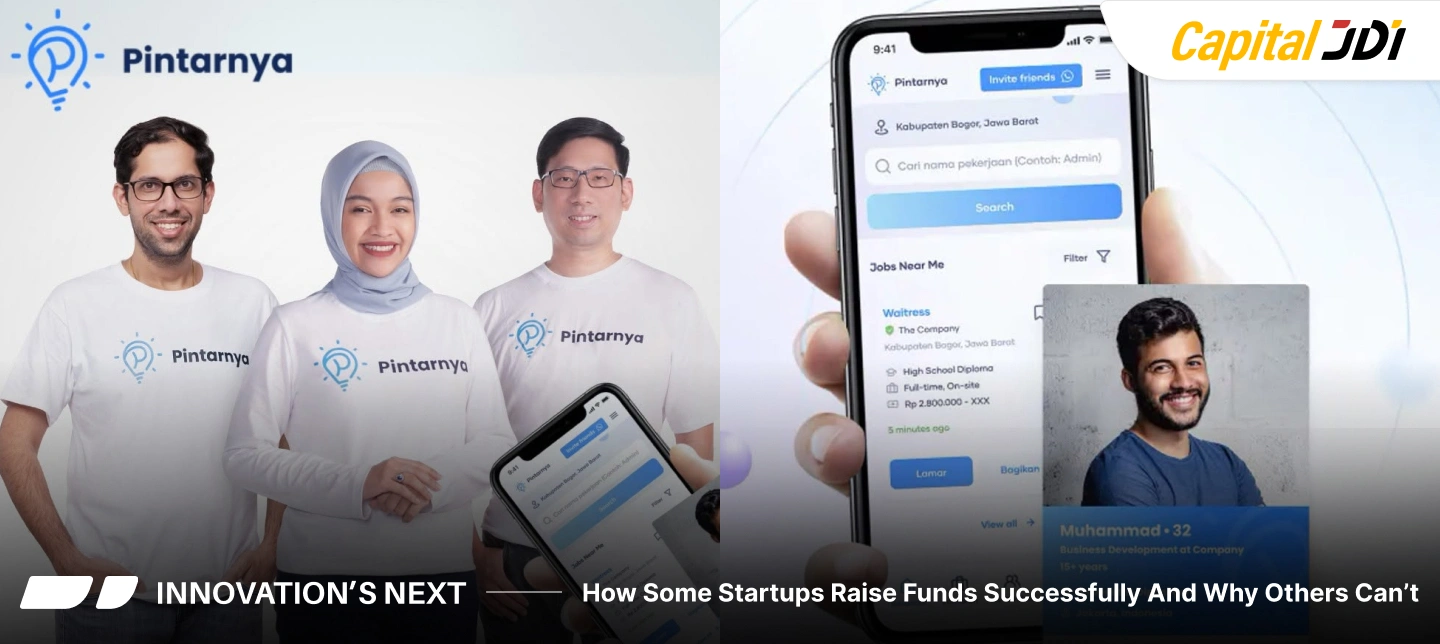
- What they do: Job marketplace and embedded financial services for blue‑collar workers and SMEs.
- Why they got funded: Large, underserved TAM; strong founder-market fit (ex-GoJek/Grab operators); clear wedge via jobs leading to financial products (pay advance, loans).
- Reported investors/coverage: Backed by Peak XV’s (previously Sequoia) Surge and others
MindFi (Singapore, B2B mental health) – Seed/Seed extension, 2023–2024
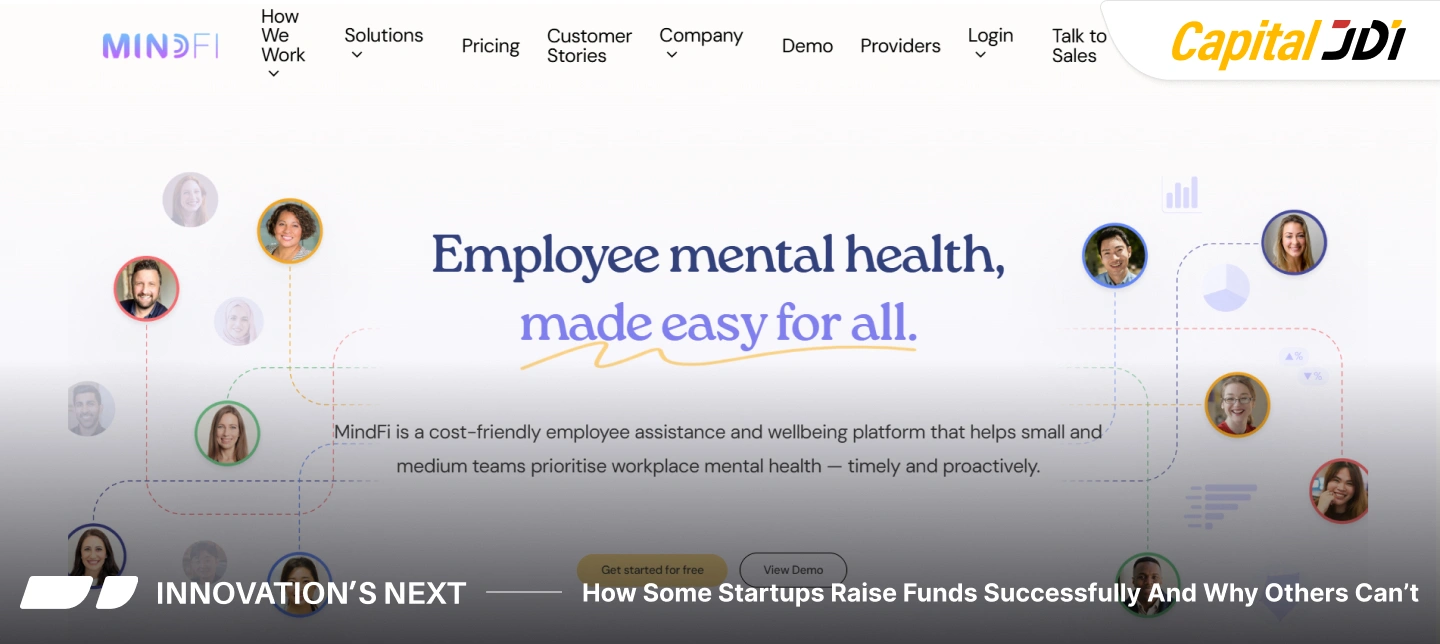
- What they do: Workplace mental health platform providing localized care across Asia.
- Why they got funded: Enterprise customers, strong retention, localized provider network, and growing corporate wellness budgets — key proof points that strengthened their ability to raise funds.
- Investors and coverage: Backed by M Venture Partners and angels
Make It Easier With Capital JDI
Fundraising isn’t an IQ test—it’s an operational process. Teams that prepare, iterate quickly, and run a tight timeline tend to outperform because they understand the discipline behind evaluating different ways to raise funds.
If you’re raising Seed or Series A in SEA and want sharp, investor-grade feedback on your deck, metrics, and strategy, book a free call with Mr. Hussein Sulaiman, Investment Principal at Capital JDI. He will help you stress-test your story and sharpen your fundraising approach.
Not ready to talk yet? Explore our curated VC lists to find the investors most relevant to you:
- Indonesia’s Best Venture Capital Firms to Watch In 2025
- Top Active Venture Capital Companies For Vietnam’s Startups
- Southeast Asia’s Most Active Venture Capital Firms In 2025
- Top Venture Capital Philippines Firms for Startups 2026
And if you are ready to move faster, join our Next Wave Capital Program to pitch directly to over 400+ VCs from our network, while also receiving direct strategic guidance and mentorship.